


What is Sex Trafficking?
Sex trafficking is a form of human trafficking that involves recruiting, moving, or holding someone for the purposes of sexually exploiting them.
The Action-Means-Purpose (AMP) model is a framework to help us better understand human trafficking.
Action-Means-Purpose Model

Traffickers need to do something to their victim (which is the action), using methods of control (which are the means), for a reason that benefits the trafficker (which is the purpose). For a situation to qualify as trafficking, there only needs to be one action, one means, and one purpose. It’s common for there to be multiple actions, means, or purposes involved; especially multiple means.
Human trafficking is a severe violation of human rights that tears away our universal right to autonomy and self-determination. It can take on many forms including sex trafficking, labour trafficking, and organ trafficking.
Watch a short video to solidify your understanding
Sex trafficking can affect people of all ages, ethnicities, and genders, and often targets those who are already in vulnerable situations. Sex trafficking occurs in urban, rural, and remote areas in Canada. Victims may be Canadian citizens, permanent residents, or temporary migrants, including youth and adults.
While it is true that anyone can be trafficked, some individuals are higher risk. Traffickers often look for individuals who may be experiencing instability, isolation, or unmet needs. They offer to fill those needs as a way to build trust, offering false promises of safety, affection, or financial security.
Vulnerabilities to sex trafficking can include:
Financial instability, lack of access to educational or job opportunities
Previous abuse or trauma – including physical, sexual, or emotional abuse
Lack of stable housing
Substance abuse and addiction
Discrimination or systemic inequities – such as racism, sexism, homophobia, ableism
Recent migration or relocation
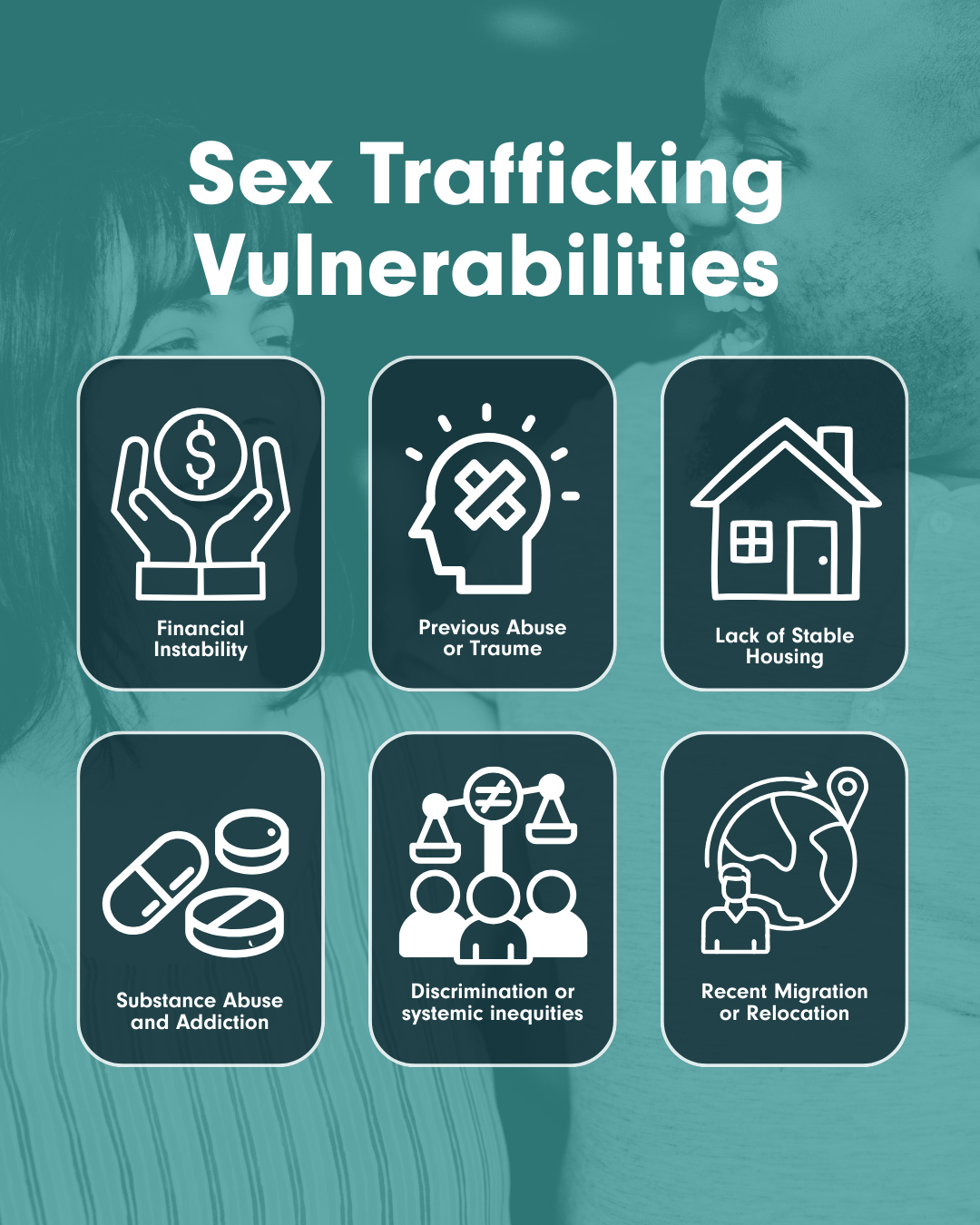
Sex Trafficking Vulnerabilities

91% of victims of police-reported human trafficking knew their trafficker.

A Common Progression of Trafficking
Sex trafficking doesn’t happen overnight. It happens gradually, like the metaphor of a frog in a pot of boiling water. If the water is already boiling when the frog is introduced, it will jump right out. However, if room temperature water is slowly heated up, it can be tricky to notice what’s happening until serious harm is already done.
While no two trafficking situations are identical, they often share many similarities in how they progress. This is what the process can look like when the trafficker presents as an intimate partner of the victim.
-
Traffickers begin by finding a way to lure their victim, often looking for unmet needs in a person's life that they can fill as a way to build trust. This can be done through establishing friendship, showing romantic interest, or offering a job or other financial opportunity.
-
Grooming begins by trying to build trust and make the victim feel special. The trafficker may make false promises to fulfill their victims' needs. They often buy expensive gifts or offer financial rewards, and make promises for the future to try to earn their target’s affection and trust. This also increases the victims' reliance on the trafficker.
-
The trafficker attempts to isolate the victim, driving a wedge between them and their family, friends, and support network. This increases the victims’ reliance on the trafficker, and gets rid of close connections who may grow concerned for the victim.
-
The trafficker uses whatever needs they have met for the victim against them, withholding the things that once made the victim feel cared for.They may also create a sense of debt, claiming the victim owes them, or must help pay for their shared future. The trafficker will start to exert greater control, restricting where they go and what they do, or controlling access to their phone and identification documents. By this stage, the conditioning and deep trust make it hard to see the abuse taking place. The trafficker may use guilt, threats, force, or emotional blackmail to maintain their control.
-
The trafficker may demand that the person being trafficked sell sex in order to make a certain amount of money, to cover their expenses or to avoid punishment. The trafficker may create an illusion of freedom, but in reality, the person being trafficked has little to no choice. The trafficker controls their movements, communication, and routines. At this stage the target is emotionally, mentally, and physically abused.
Trafficking isn’t what you think it is.
This video illustrates a common pathway into sex trafficking that begins with an intimate or romantic relationship. It shows how affection, trust, and emotional connection can gradually be used to exert control, normalize exploitation, and isolate a person over time.

34% of victims of police-reported human trafficking were trafficked by an intimate partner.
Sex Trafficking Indicators
Recognizing the signs can help prevent further harm and connect victims to support. Seeing one sign by itself doesn’t always mean trafficking is happening. Try to look at the bigger picture and notice whether several behaviours or concerns are happening at the same time.
Some indicators of sex trafficking may include:
Have a new relationship with someone controlling, either in-person or online
Frequent relocation or stays in multiple different hotels or residences
Receive excessive gifts or cash from a partner
Limited freedom of movement and/or a sudden change or reduction in contact with family and friends
Appears unusually anxious, submissive, tense or nervous/paranoid
Sudden changes in appearance and behaviour
Signs of physical and/or sexual abuse
Unable to speak for themselves or offers scripted responses
Extensive security or frequently accompanied by someone else

Do you need help?
You are not alone.
If you (or someone you know) is a survivor of human trafficking, we can help get the support you need.
If you are in immediate danger, please dial 911.